

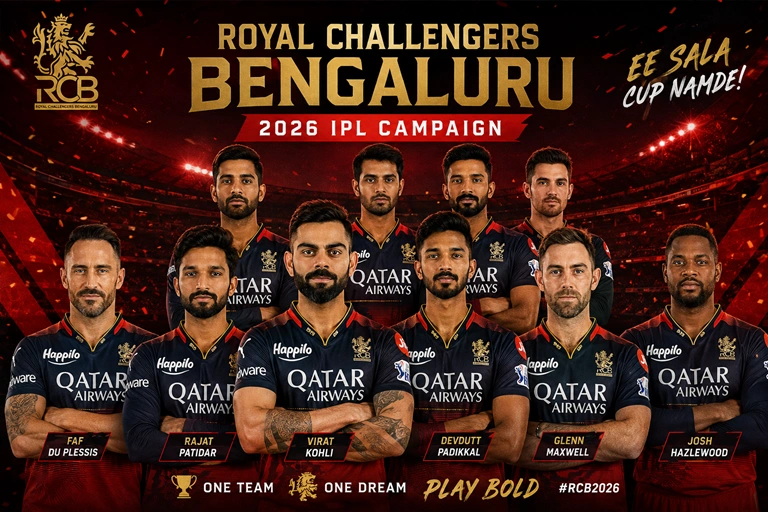
Imagine entering an IPL season as defending champions, carrying the pressure of finally ending a long wait, and then being expected to do it all over again. That was the challenge facing Royal Challengers Bengaluru in 2026. Instead of relying on one superstar, RCB produced a remarkably balanced campaign: Virat Kohli and Rajat Patidar drove the batting, Devdutt Padikkal added aggression at No. 3, while Bhuvneshwar Kumar, Josh Hazlewood and Rasikh Dar led a much-improved bowling attack. The result? Another IPL trophy.
Quick Summary
- Royal Challengers Bengaluru won IPL 2026, defeating Gujarat Titans by five wickets in the final.
- RCB finished the league stage with 9 wins from 14 matches, collecting 18 points and topping the table on net run rate.
- Virat Kohli scored 675 runs, including a century and five fifties.
- Rajat Patidar scored 501 runs and continued his impressive development as RCB captain.
- Devdutt Padikkal scored 464 runs at a strike rate of 168.73, emerging as a key No. 3 batter.
- Tim David scored 305 runs at a strike rate of 188.27, providing explosive finishing.
- Bhuvneshwar Kumar took 28 wickets, finishing just one wicket behind the Purple Cap winner.
- RCB defeated Gujarat Titans by 92 runs in Qualifier 1 before beating the same opponent by five wickets in the final.
Royal Challengers Bengaluru Players: Who Made the Difference in 2026?
The RCB squad entered the 2026 season with a blend of proven international quality, experienced Indian players and younger options. The official squad included batters such as Virat Kohli, Rajat Patidar, Devdutt Padikkal, Phil Salt, Jitesh Sharma and Tim David; all-rounders including Krunal Pandya, Venkatesh Iyer, Romario Shepherd and Jacob Bethell; and bowlers such as Bhuvneshwar Kumar, Josh Hazlewood, Rasikh Dar, Suyash Sharma and Jacob Duffy.
That depth became one of the defining features of the campaign.
RCB did not need every player to deliver in every match. Different players stepped forward at different stages. When the batting unit struggled, the bowling attack could compensate. When the top order was flying, the lower middle order had enough power to finish innings strongly.
That is a useful distinction between a talented squad and a championship squad. Talent gives you options. Depth gives you solutions.
Rajat Patidar: Captain and 500-Run Batter
Rajat Patidar’s 2026 season deserves special attention because he contributed in two demanding roles.
As captain, he led RCB to a second consecutive title. With the bat, he scored 501 runs, the first time an RCB captain had crossed the 500-run mark in a season. His unbeaten 93 against Gujarat Titans in Qualifier 1 was arguably his most important knock of the playoffs.
Patidar’s leadership style was notably calm. RCB’s own cricket director Mo Bobat later highlighted how unfazed the captain appeared despite the pressure of leading a defending champion.
That composure mattered. T20 captaincy can become chaotic very quickly: match-ups, bowling changes, Impact Player decisions and rapidly changing run rates all demand immediate judgment. Patidar’s ability to remain composed gave RCB a stable centre.
Virat Kohli: Still the Batting Engine
There was no shortage of attention on Virat Kohli, but his 2026 campaign justified every bit of it.
Kohli finished the season with 675 runs at a strike rate of 165.54, scoring five fifties and one century. He then saved his most important innings for the final, remaining unbeaten on 75 as RCB chased down Gujarat Titans’ 156-run target.
That final innings was classic Kohli in a slightly different T20 context. There was no need for reckless hitting because the bowling unit had already restricted Gujarat to a modest total. Kohli read the situation, absorbed pressure and accelerated when required.
His presence also had a structural benefit. Oppositions could not afford to focus exclusively on one RCB batter. If they committed too many resources to Kohli, players such as Patidar, Padikkal or Tim David could exploit the opening.
Devdutt Padikkal: The No. 3 Accelerator
Padikkal’s 2026 campaign was one of the more intriguing stories in the RCB batting order.
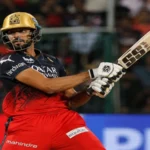
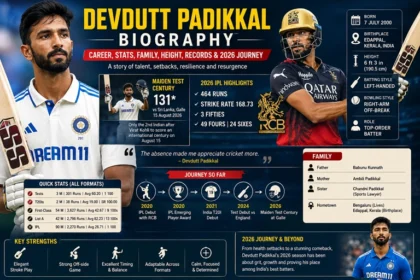
He scored 464 runs at a strike rate of 168.73, with three fifties. More importantly, his move to No. 3 gave RCB another aggressive batter between the established top order and the finishers.
The role suited him.
Padikkal was not simply waiting for the perfect scoring opportunity. RCB’s own season review described his approach as consistently attacking, whether he was chasing a target or setting one. That intent helped RCB turn starts into substantial totals and made their batting order less dependent on a single opener.
For a player whose earlier IPL seasons were often built around timing and accumulation, the 2026 version looked considerably more forceful.
Tim David: The Finishing Power
If Kohli provided control and Padikkal supplied aggression through the middle, Tim David offered pure finishing power.
David scored 305 runs at a remarkable strike rate of 188.27, and his unbeaten 70 against Mumbai Indians was one of the clearest examples of his ability to change a match in a short burst.
His contribution in the final was even more valuable than the raw season numbers suggest. After RCB lost Rajat Patidar and Krunal Pandya in the same over, David joined Kohli and helped settle the chase. Their 42-run partnership effectively removed the remaining uncertainty from the pursuit.
That is exactly what teams want from a No. 6 or No. 7 batter. You may not face many deliveries, but when you do, they need to count.
How Did RCB’s 2026 IPL Campaign Unfold?
RCB’s league campaign was not a procession. The team finished with nine wins and five losses, ending on 18 points. Gujarat Titans and Sunrisers Hyderabad also finished with 18 points, but RCB’s +0.783 net run rate gave them top spot.
That final league position was crucial because it gave RCB the advantage of playing Qualifier 1.
A Strong Start
RCB opened the season with a six-wicket victory over Sunrisers Hyderabad, chasing 202 with room to spare. They then beat Chennai Super Kings by six wickets and produced a huge 43-run win over CSK in another early-season statement.
The campaign was not flawless. RCB suffered defeats against Rajasthan Royals, Delhi Capitals, Gujarat Titans and Lucknow Super Giants during the league stage.
Yet the response to those setbacks was important. The team repeatedly recovered rather than allowing one defeat to become a losing streak.
The Bowling Attack Became the Difference
RCB’s own assessment of the season repeatedly returned to one theme: bowling.
Before Qualifier 1, captain Patidar described bowling as the team’s strength, specifically pointing to the work of Bhuvneshwar Kumar, Josh Hazlewood and Rasikh Dar in the powerplay.
The numbers support that assessment.
Bhuvneshwar Kumar finished with 28 wickets at an economy rate of 7.95, the best IPL season of his career according to RCB’s season review. Rasikh Dar took 19 wickets, Josh Hazlewood 15 and Krunal Pandya 14.
This was not simply a collection of individual performances. The attack had different tools.
Bhuvneshwar could move the new ball and control the powerplay. Hazlewood offered bounce, accuracy and experience. Rasikh Dar attacked the middle overs and broke partnerships. Krunal supplied control and tactical flexibility.
That variety made the attack harder to line up against.
Which Were RCB’s Biggest Matches of IPL 2026?
Some games define a season more clearly than others. For RCB, several matches stand out.
RCB vs Mumbai Indians: A Two-Wicket Thriller
RCB defeated Mumbai Indians by two wickets on May 10 after a tense chase. The match was a perfect example of the team’s depth: when the chase became uncomfortable, different players contributed rather than waiting for one batter to rescue the innings.
Bhuvneshwar Kumar was instrumental with the ball, while Krunal Pandya’s contribution with the bat helped stabilize the chase. Bhuvneshwar then produced a crucial late contribution with the bat as RCB crossed the line.
These are the wins that often matter more than comfortable victories. They test whether a team can make good decisions while under genuine pressure.
RCB vs Delhi Capitals: Hazlewood’s Four-Wicket Burst
The match against Delhi Capitals produced one of RCB’s most dominant bowling performances.
Josh Hazlewood returned figures of 4/12 from 3.3 overs, removing four key Delhi batters. Bhuvneshwar Kumar also contributed three wickets as RCB restricted Delhi to 75 all out before completing a nine-wicket win.
It was a reminder that RCB’s bowling wasn’t merely economical. It could also destroy an innings quickly.
RCB vs Gujarat Titans: Qualifier 1
This was arguably RCB’s most complete performance of the tournament.
RCB posted 254/5, then bowled Gujarat Titans out for 162, winning by 92 runs. The margin was enormous for a playoff match.
The victory gave RCB direct passage to the final and, psychologically, established a clear advantage over Gujarat before the teams met again in Ahmedabad.
Patidar’s unbeaten 93 was the headline batting contribution, but the bowling unit ensured the result was never seriously threatened.
The IPL 2026 Final: How RCB Won the Trophy
The final at Narendra Modi Stadium on May 31 presented RCB with a familiar opponent: Gujarat Titans.
RCB won the toss and chose to bowl. Their decision quickly paid off. Gujarat lost wickets at regular intervals, with Bhuvneshwar Kumar taking two, Josh Hazlewood taking two, and Rasikh Dar claiming three. Washington Sundar’s unbeaten 50 helped Gujarat reach 155/8.
A score of 155 was competitive, but RCB had the batting depth to chase it.
The reply was built around Virat Kohli. His unbeaten 75 anchored the innings while Tim David helped finish the job. RCB reached 161/5 in 18 overs, winning by five wickets and securing their second consecutive IPL title.
The victory was significant beyond the trophy itself. RCB became only the third team in IPL history to successfully defend its title.
For a franchise historically associated with near-misses, that back-to-back achievement changes the conversation.
RCB 2026 Player Statistics at a Glance
| Player | Role | Key 2026 Contribution |
|---|---|---|
| Virat Kohli | Batter | 675 runs, 5 fifties, 1 century |
| Rajat Patidar | Batter/Captain | 501 runs, unbeaten 93 in Qualifier 1 |
| Devdutt Padikkal | Batter | 464 runs at 168.73 strike rate |
| Tim David | Batter | 305 runs at 188.27 strike rate |
| Krunal Pandya | All-rounder | 226 runs, 14 wickets |
| Bhuvneshwar Kumar | Bowler | 28 wickets |
| Rasikh Dar | Bowler | 19 wickets |
| Josh Hazlewood | Bowler | 15 wickets |
| Suyash Sharma | Bowler | 9 wickets |
These figures show why RCB’s campaign was about more than one or two stars. The leading batters covered different roles, while the bowling attack supplied wickets across multiple phases of the innings.
What Made the 2026 RCB Squad Different?
The biggest difference was balance.
Historically, RCB teams have often carried enormous batting expectations. In 2026, the side had enough bowling quality to win matches even when the batting was not at its best.
There was also tactical flexibility. Venkatesh Iyer could contribute with bat and ball, Krunal Pandya provided left-arm spin and lower-order batting, and the pace group could attack both the start and end of an innings.
The batting order had similar flexibility. Kohli could anchor, Patidar could attack spin and pace, Padikkal could maintain the tempo at No. 3, and Tim David could provide late acceleration.
That combination made RCB less predictable.
And perhaps that is the biggest lesson from their 2026 campaign: championship teams are rarely built around one formula. They need enough quality to win in several different ways.
What Does RCB’s 2026 Campaign Mean for the Future?
The obvious question now is whether RCB can turn back-to-back titles into a longer period of dominance.
There is no guarantee. IPL squads change quickly, and a successful season often makes weaknesses easier for rivals to identify. Opponents will study how RCB used Padikkal at No. 3, how Patidar managed the bowling resources and how Bhuvneshwar-Hazlewood-Rasikh worked together.
Still, the foundations are strong.
Kohli remains an elite T20 run scorer. Patidar has established himself as a successful captain. Padikkal has found an aggressive role that suits his game. Tim David gives the middle and lower order a genuine power option. The bowling group has proven capable of winning matches rather than simply containing opponents.
The next challenge is sustainability.
RCB’s 2026 campaign was not perfect, but that actually makes the achievement more convincing. They lost five league matches, faced pressure in close chases and had to recover from setbacks. Their ability to keep accumulating wins ultimately put them at the top of the table.
That is what a complete IPL campaign looks like.
Frequently Asked Questions
Who are the key Royal Challengers Bengaluru players in 2026?
RCB’s leading performers included Virat Kohli, Rajat Patidar, Devdutt Padikkal, Tim David, Bhuvneshwar Kumar, Josh Hazlewood, Rasikh Dar and Krunal Pandya. Together, they provided the batting depth and bowling variety that powered the title defence.
Did Royal Challengers Bengaluru win IPL 2026?
Yes. RCB defeated Gujarat Titans by five wickets in the IPL 2026 final at Narendra Modi Stadium in Ahmedabad. The victory gave Bengaluru its second consecutive IPL title.
Who was RCB’s highest run scorer in IPL 2026?
Virat Kohli was RCB’s leading run scorer in 2026 with 675 runs at a strike rate of 165.54. Rajat Patidar followed with 501 runs, while Devdutt Padikkal scored 464.
Who took the most wickets for RCB in IPL 2026?
Bhuvneshwar Kumar was RCB’s leading wicket-taker with 28 wickets at an economy rate of 7.95. He finished just one wicket behind Gujarat Titans’ Kagiso Rabada for the tournament’s Purple Cap.
Conclusion
Royal Challengers Bengaluru’s 2026 IPL campaign was built on something the franchise had often been searching for: balance. Kohli delivered another outstanding season, Patidar grew into his leadership role, Padikkal added aggression, Tim David provided finishing power, and the bowling attack consistently created pressure.
The result was a second straight championship.
RCB’s biggest achievement in 2026 was not simply winning another final. It was proving that the 2025 title was not an isolated breakthrough. This team has developed the depth, adaptability and composure required to win across an entire IPL season.